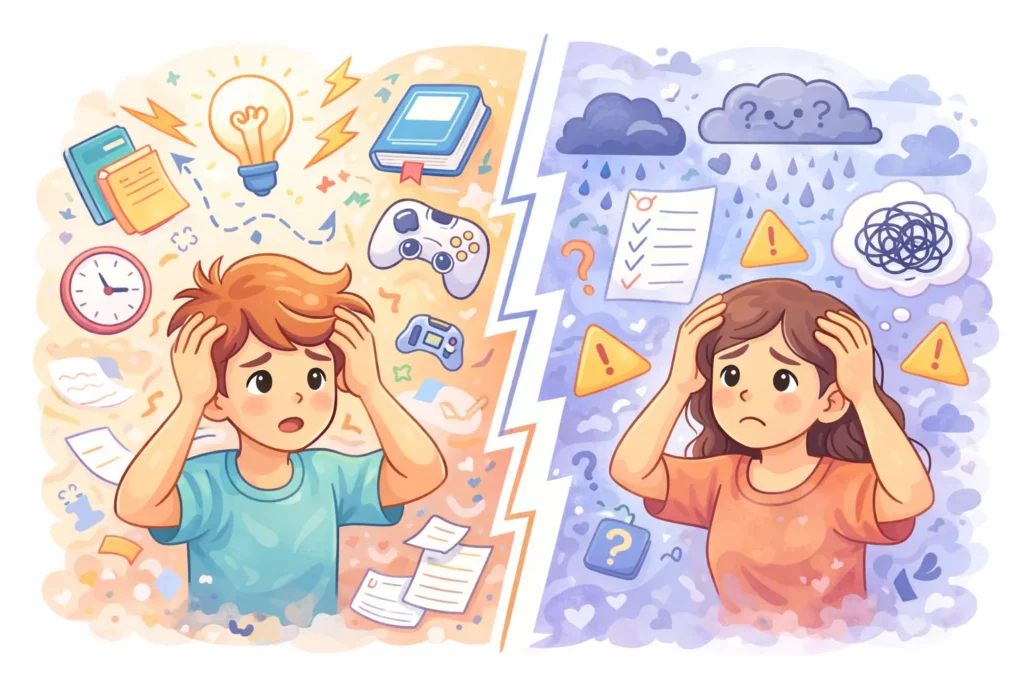
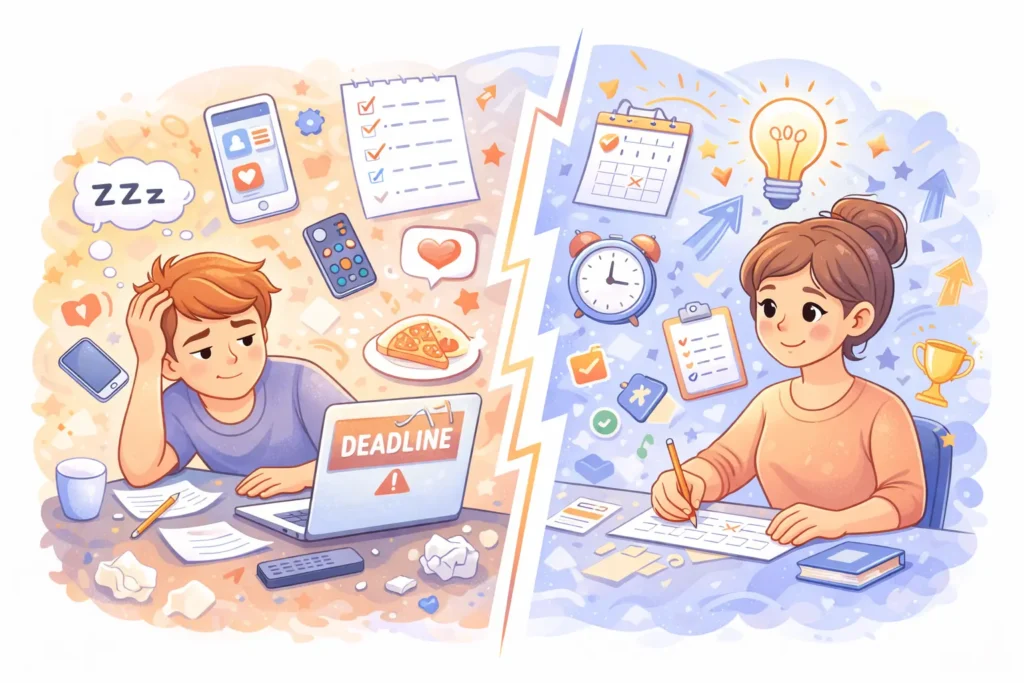
You know what you need to do. The deadline is there. The task is clear. The consequences are real.
And yet… You still haven’t started. If this feels familiar, you’re not lazy.
You’re experiencing something explained by procrastination psychology, a pattern where the brain avoids discomfort, not responsibility.
🧠Take the ADHD Symptom Test to explore your attention patterns and understand whether ADHD traits may be affecting your focus.Quick Answer: Why Do People Procrastinate?
People procrastinate because of emotional discomfort, not lack of discipline. According to procrastination psychology, tasks are delayed when they trigger stress, fear, overwhelm, or self-doubt, and the brain chooses short-term relief over long-term benefit.
What Is Procrastination Psychology?
Procrastination psychology explains why people delay tasks even when they know it may lead to negative outcomes.
At its core, procrastination is not a time management issue. It’s an emotional regulation pattern.
When a task feels:
- Overwhelming
- Boring
- Stressful
- Uncertain
The brain avoids it to reduce discomfort. This creates temporary relief but increases stress later.
Why Do I Procrastinate? (Real Causes)
If you’ve ever asked, “Why do I procrastinate?”, the answer usually lies in one of these patterns:
1. Fear of Failure
Starting means risking not doing well.
2. Perfectionism
You delay because you want to do it “perfectly.”
3. Overwhelm
The task feels too big, so your brain shuts down.
4. Lack of Clarity
Unclear steps create mental resistance.
5. Low Emotional Energy
Burnout or stress reduces your ability to engage.
The Emotional Side of Procrastination
One of the biggest insights from procrastination psychology is this:
Procrastination is emotional. The brain avoids tasks that trigger:
- Anxiety
- Self-doubt
- Stress
- Discomfort
This is why it’s linked to the emotional reasons for procrastination, not just productivity habits. Avoidance becomes a coping mechanism.
Procrastination vs Laziness: What’s the Difference?
This distinction matters.
Laziness = no desire to act
Procrastination = desire to act, but inability to start
If you feel guilt, stress, or frustration about not doing something, you’re not lazy.
You’re stuck in a procrastination loop.
🧘♀️SoulTip: Breaking tasks into smaller steps reduces cognitive resistance and increases completion rates.
Common Procrastination Habits
Many procrastination habits feel harmless in the moment.
Examples include:
- scrolling on your phone
- reorganizing instead of starting
- overplanning
- waiting for the “right mood.”
- avoiding decisions
These behaviors provide short-term comfort but delay progress
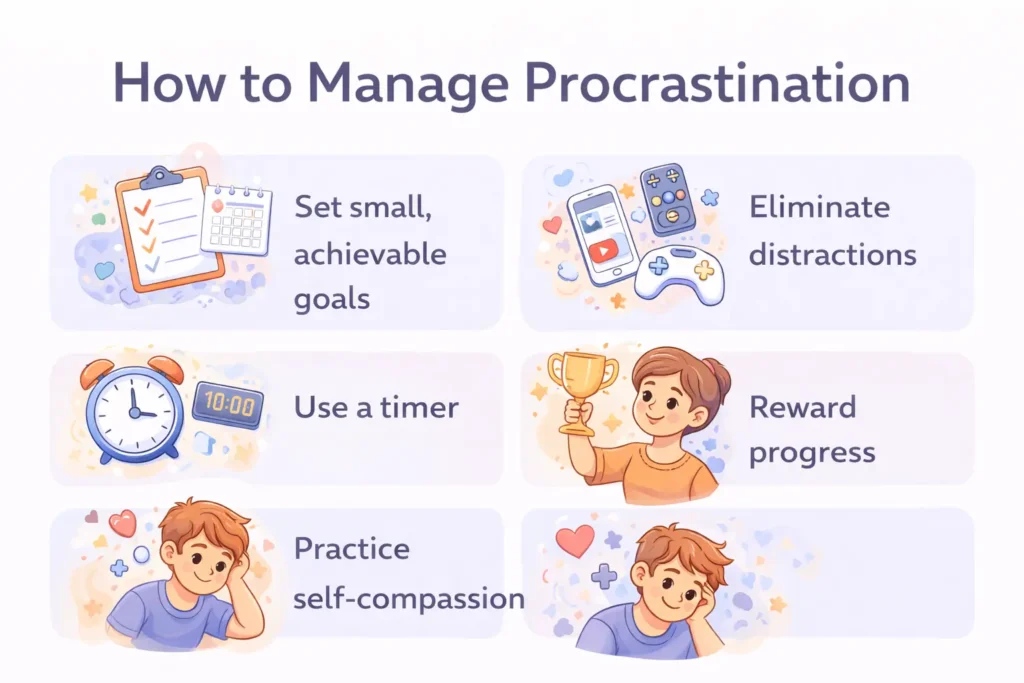
How to Stop Procrastinating (Science-Backed)
If you’re looking for how to stop procrastinating, the solution isn’t motivation.
It’s reducing emotional resistance. Here’s what works:
1. Start Small (Micro-Steps)
Break tasks into the smallest possible actions.
2. Act Before You Feel Ready
Motivation often follows action, not the other way around.
3. Reduce Emotional Friction
Make tasks feel easier to begin.
4. Use Time Blocks
Commit to short, focused sessions instead of long hours.
5. Regulate Your Nervous System
Calm your mind before starting, especially if the task feels stressful.
🧘♀️SoulTip: Research shows procrastination is linked to emotional regulation rather than poor time management.
Why Productivity Advice Often Fails?
Many productivity tips focus on discipline.
But the real issue is productivity vs procrastination and the difference is emotional.
Traditional advice ignores:
- fear
- stress
- overwhelm
- self-doubt
That’s why forcing yourself often doesn’t work.
When emotional resistance stays high, procrastination continues.
When Procrastination Is Linked to Anxiety or ADHD
Sometimes procrastination is connected to deeper patterns like anxiety or attention challenges.
- Anxiety can make tasks feel threatening
- ADHD can affect attention and task initiation
👉 You can explore this further in our ADHD vs Anxiety: How to Tell the Difference blog.
Understanding the root helps you respond more effectively.
🧘♀️SoulFact: According to Harvard Business Review, procrastination is driven more by emotional avoidance than lack of discipline.
Conclusion
Understanding procrastination psychology changes how you see the problem. You’re not delaying because you don’t care. But you’re delaying because something about the task feels uncomfortable.
When you address the emotional side, not just the task, change becomes easier. Learning how to stop procrastinating isn’t about forcing action. It’s about making starting feel safe.
💬 Talk to Soululu if you’re unsure whether your symptoms feel more like ADHD, and try the tools which will help you with your procrastination.