
😨 Panic Attack Feels Like
You’re suddenly overwhelmed. Your heart races. Your chest feels tight. You can’t breathe. You feel like you’re dying, but you’re not.
That’s what a panic attack feels like.
It hits fast, often without warning. You might be in line at the store or lying in bed, and suddenly, your body goes into full emergency mode. Let’s break down the signs, causes, and what to do if this happens to you.
🔍 Signs & Symptoms of a Panic Attack
A panic attack is your body’s false alarm. It mimics a real emergency even when you’re completely safe.
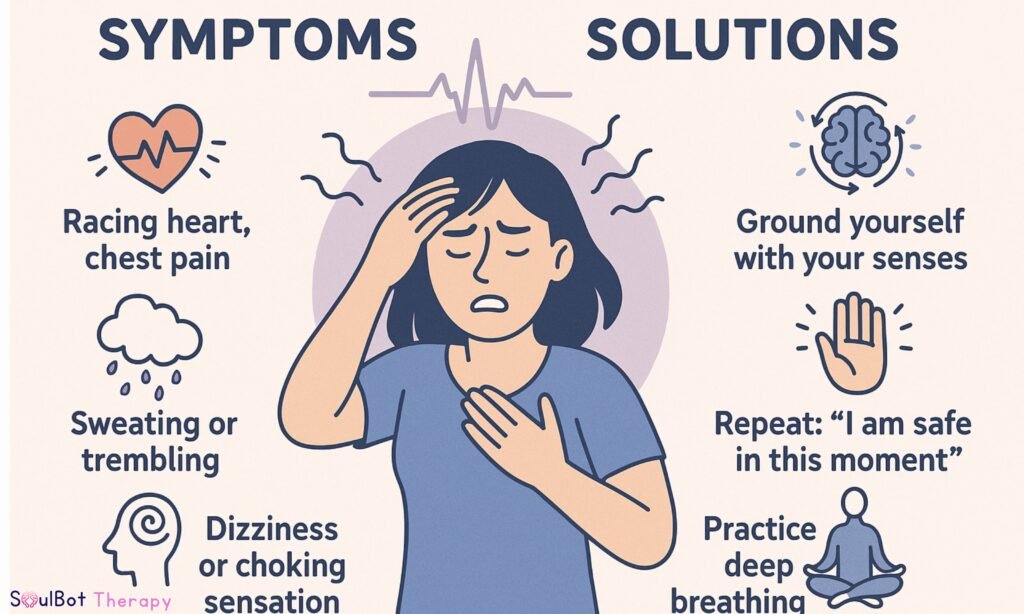
Common symptoms of a panic attack include:
- Rapid heartbeat or chest pain
- Shortness of breath
- Dizziness or lightheadedness
- Chills or hot flashes
- Tingling or numbness (especially in hands or face)
- Shaking or trembling
- Nausea or stomach cramps
- A feeling of detachment from reality (derealization)
- A sudden fear of dying or “going nuts”
🧠 Fact: According to the Mayo Clinic, nearly 1 in 10 people will experience a panic attack in their lifetime.
🧠 Why Do Panic Attacks Happen?
Panic attacks are part of your body’s fight-or-flight response — but they fire off even when there’s no threat. Triggers can be emotional, physical, or completely unknown.
Common triggers include:
| Emotional Triggers | Physical Triggers | Environmental Triggers |
| Stress or overthinking | Caffeine, low blood sugar | Crowded or confined places |
| Past trauma | Hormonal changes | Loud noises or bright lights |
| Suppressed emotions | Lack of sleep | Driving, flying, or public spaces |
If you’ve been feeling anxious for no reason lately, your body might be in a state of hypervigilance. That means your nervous system is constantly on edge, ready to panic.
Not sure if your panic is normal or something deeper?
Take the Free Anxiety Test — it’s private, research-backed, and built to help you understand your mind better.
🆘 What to Do During a Panic Attack
1. Remind Yourself: “I’m Safe.”
You’re not dying. You’re not going wild. Your body is reacting to a false alarm.
2. Ground Yourself (5-4-3-2-1)
Look around and name:
- 5 things you can see
- 4 things you can touch
- 3 things you can hear
- 2 things you can smell
- 1 thing you can taste
This brings your brain back to the present.
3. Breathe Deeply (Box Breathing)
Inhale for 4 seconds → Hold for 4 → Exhale for 4 → Hold for 4
Repeat 5–7 times. It tells your body: “We’re okay.”
4. Use a Mental Health Tool Like SoulBot
Try AI therapy chat tools like SoulBot — they help you unpack the moment, track patterns, and feel supported without judgment.🧠 Panic Attack vs Anxiety Attack
| Feature | Panic Attack | Anxiety Attack |
| Onset | Sudden, unexpected | Gradual, triggered by stress |
| Physical Symptoms | Intense (heart, breathing, nausea) | Milder physical discomfort |
| Mental Symptoms | Fear of dying, losing control | Worry, dread |
| Duration | Peaks in 10 mins, fades in 30 | Can last longer (hours/days) |
💡 Tip: Many people confuse the two. Knowing the difference helps with proper treatment.
You’re Not Alone, and Panic Attacks Are Manageable
Panic attacks can be terrifying, but they are not a sign that something is broken in you. They’re your body’s way of responding to emotional overload or unresolved tension. By understanding what a panic attack feels like, recognizing your triggers, and using the right tools, you can take back control of your mind and body.
Don’t suffer in silence. Whether it’s through grounding exercises, therapy, or AI support like SoulBot, help is available, and healing is possible.
You are not your panic. You’re a person learning to feel safe again.