- Trouble focusing.
- Racing thoughts.
- Restlessness that never quite settles.
These experiences can make people wonder what’s actually going on in their minds.
- Is it anxiety?
- Is it ADHD?
- Or could it be both?
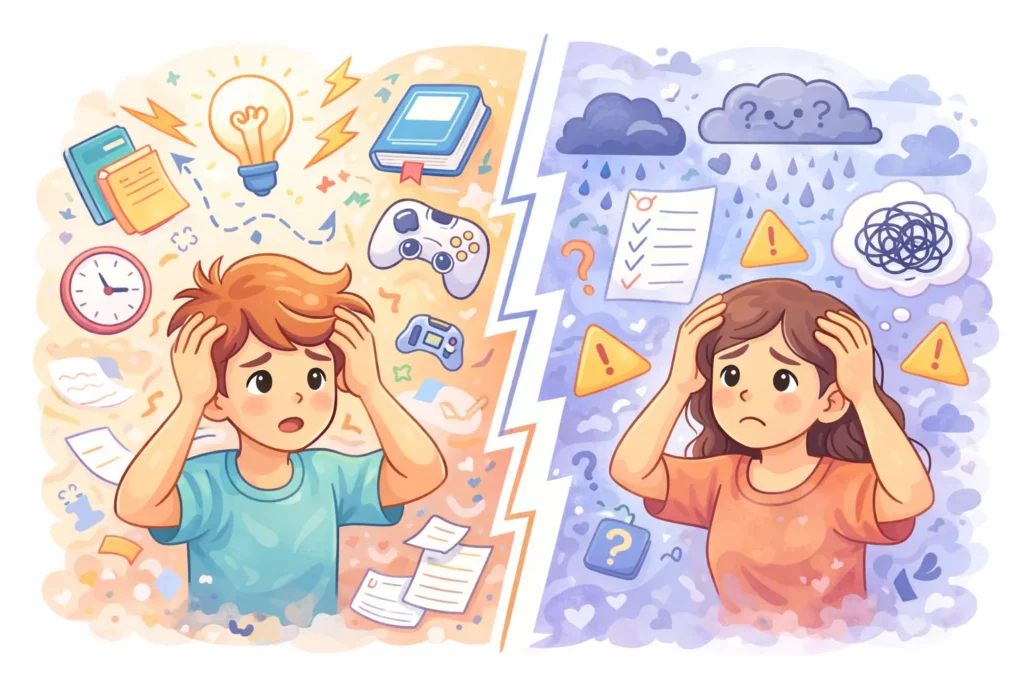
The confusion is understandable because ADHD vs anxiety often looks very similar on the surface. Both can affect concentration, energy levels, and emotional regulation.
But the reasons behind those symptoms are different. Understanding those differences can help you make sense of your experiences and decide what kind of support might help.
Quick Answer: ADHD vs Anxiety
What is the difference between ADHD and anxiety?
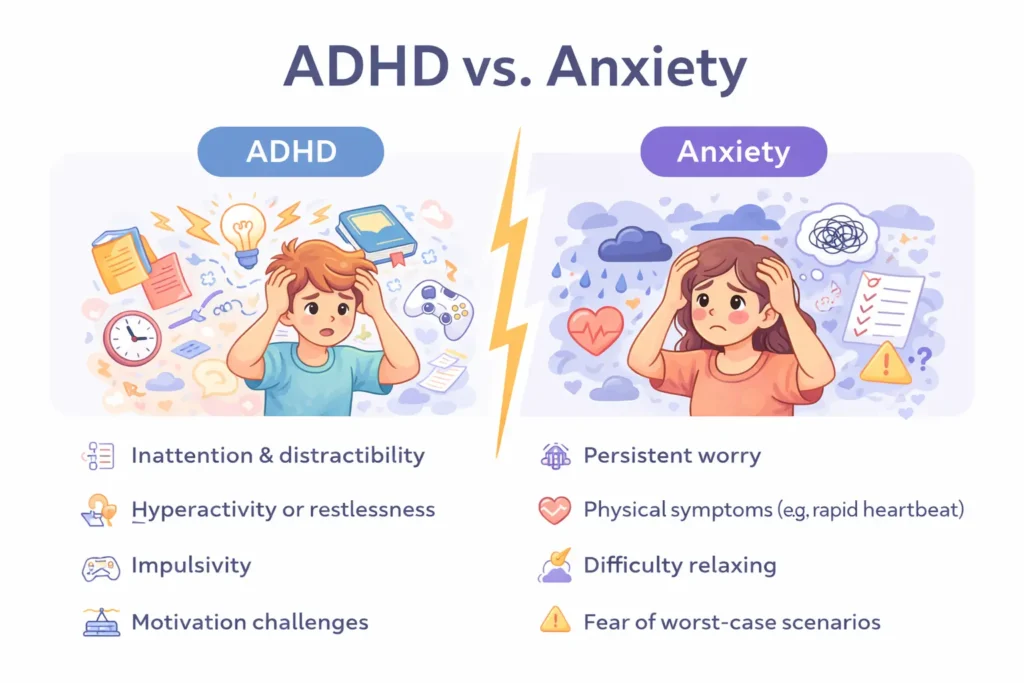
ADHD primarily affects attention regulation and impulse control, while anxiety is driven by fear, worry, and the body’s stress response. Both can affect focus, but ADHD causes distraction even when calm, whereas anxiety usually disrupts concentration due to worry or stress.
What Is ADHD?
Attention-Deficit/Hyperactivity Disorder (ADHD) is a neurodevelopmental condition that affects how the brain manages attention, impulse control, and executive functioning.
Common ADHD traits include:
- difficulty maintaining focus
- frequent distraction
- impulsive decision-making
- challenges with organization
- restlessness or hyperactivity
People with ADHD often find that their attention fluctuates. Tasks that feel interesting may capture intense focus, while routine or repetitive tasks can feel almost impossible to complete.
This pattern is a key reason why ADHD vs anxiety symptoms sometimes get confused.
What Is Anxiety?
Anxiety is a psychological and physical response to perceived threats or uncertainty. While occasional anxiety is normal, chronic anxiety can make everyday situations feel overwhelming.
Common anxiety symptoms include:
- persistent worry
- racing thoughts about worst-case scenarios
- muscle tension
- restlessness
- difficulty concentrating due to stress
When anxiety is present, the brain becomes highly alert to potential danger. This heightened vigilance can make it harder to focus on tasks that require calm concentration.
Understanding the difference between ADHD and anxiety helps explain why both conditions can affect attention in different ways.
🧠 Take the ADHD Symptom Test to explore your attention patterns and understand whether ADHD traits may be affecting your focus.Why ADHD and Anxiety Often Feel Similar?
One reason the ADHD vs anxiety question is so common is that the two conditions share several overlapping symptoms.
These include:
- trouble concentrating
- restlessness
- racing thoughts
- sleep difficulties
- emotional overwhelm
However, the source of these experiences is different.
In ADHD, distraction often occurs because the brain struggles to regulate attention.
In anxiety, distraction happens because worry or stress keeps pulling the mind away from the present moment.
This overlap is sometimes referred to as the ADHD and anxiety overlap, which can make self-identification difficult without professional guidance.
Signs Your Symptoms May Be ADHD
Some patterns are more commonly linked to ADHD than anxiety.
Signs may include:
- chronic disorganization
- forgetting appointments or tasks
- impulsive decisions
- difficulty completing routine work
- intense focus on interesting activities, but difficulty starting boring ones
People experiencing these patterns often describe attention problems that appear even when they feel calm.
This is one way to distinguish ADHD vs anxiety symptoms.
🧘♀️SoulTip: ADHD affects brain networks involved in attention regulation and impulse control, which can influence organization, focus, and decision-making.
Signs Your Symptoms May Be Anxiety
Other patterns tend to align more closely with anxiety.
Common signs include:
- persistent worrying thoughts
- difficulty relaxing
- fear of making mistakes
- tension in the body
- focus problems that worsen during stress
In anxiety vs ADHD in adults, concentration usually improves when the source of worry is reduced.
This is one of the key differences between the two conditions.
When ADHD and Anxiety Happen Together
It’s also possible for both conditions to occur at the same time.
Research shows that many people with ADHD also experience anxiety disorders. This can happen because living with attention challenges can create stress in work, school, or relationships.
In some cases, ADHD may even be misdiagnosed as anxiety, especially when restlessness and racing thoughts appear similar.
That’s why professional evaluation can be helpful when symptoms overlap. Understanding the difference between ADHD and anxiety helps people seek more accurate support.
💜SoulFact: According to the Centers for Disease Control and Prevention (CDC), ADHD affects brain systems responsible for attention regulation and executive functioning.
Why Understanding the Difference Matters?
When someone understands the ADHD vs anxiety distinction, it becomes easier to identify which strategies may actually help.
For example:
- ADHD support often focuses on structure, attention management, and executive functioning tools.
- Anxiety support focuses more on stress regulation, emotional coping skills, and calming the nervous system.
Recognizing the root cause of your experience can help guide you toward the right kind of support.
🧘♀️SoulTip: Anxiety activates the body’s stress response system, releasing hormones like cortisol that can interfere with concentration and emotional regulation.
Conclusion
Understanding ADHD vs anxiety can feel complicated because both conditions influence focus, energy, and emotional regulation.
But the difference lies in the source of the difficulty.
ADHD affects how the brain manages attention and impulses. Anxiety affects how the mind responds to fear, uncertainty, and stress.
Recognizing these patterns doesn’t replace professional guidance, but it can help you better understand your experiences and take the first steps toward support.
💬 Talk to Soululu if you’re unsure whether your symptoms feel more like anxiety, ADHD, or both. Sometimes reflection helps bring clarity.