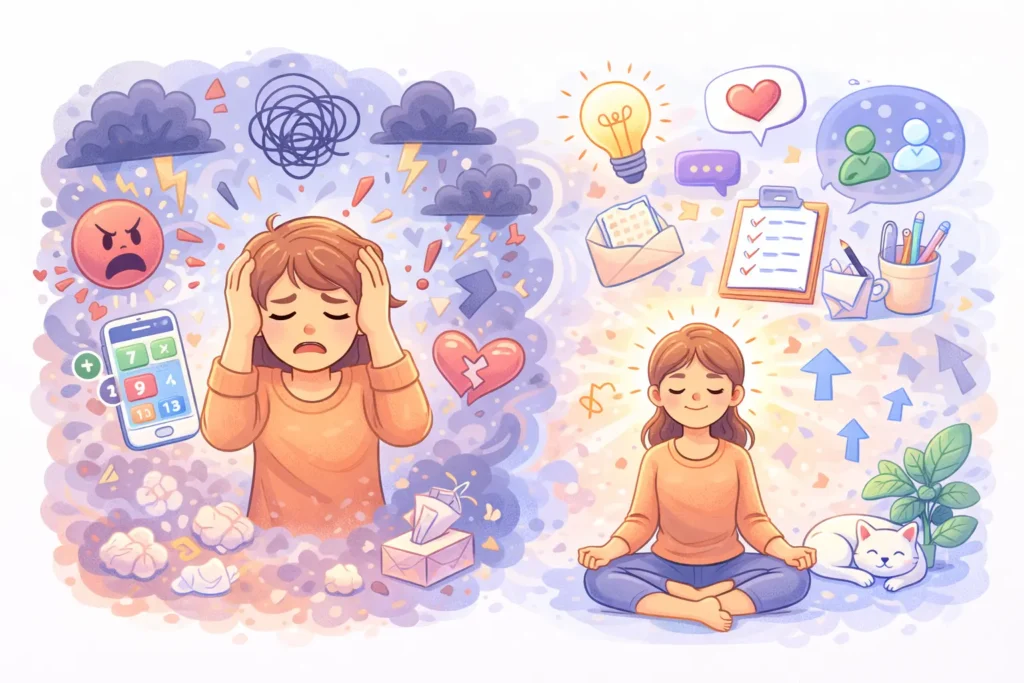
Conflict resolution in relationships is not about avoiding disagreements. It’s about navigating them in a healthy, productive way. Whether you’re in a new relationship or a long-term marriage, knowing how to resolve conflicts can make the difference between connection and collapse.
🔥 What Causes Conflict in Relationships?
Conflicts often stem from unmet needs, poor communication, emotional baggage, or even minor daily stressors. But when left unresolved, even small issues can snowball into major issues.
Some common triggers:
- Different communication styles
- Financial disagreements
- Unspoken expectations
- Attachment insecurities
- Childhood trauma (Read: How Childhood Trauma Shapes Your Adult Relationships)
💥 Why Conflict Doesn’t Mean Your Relationship Is Failing?
Let’s bust a myth: Fighting doesn’t mean your relationship is broken.
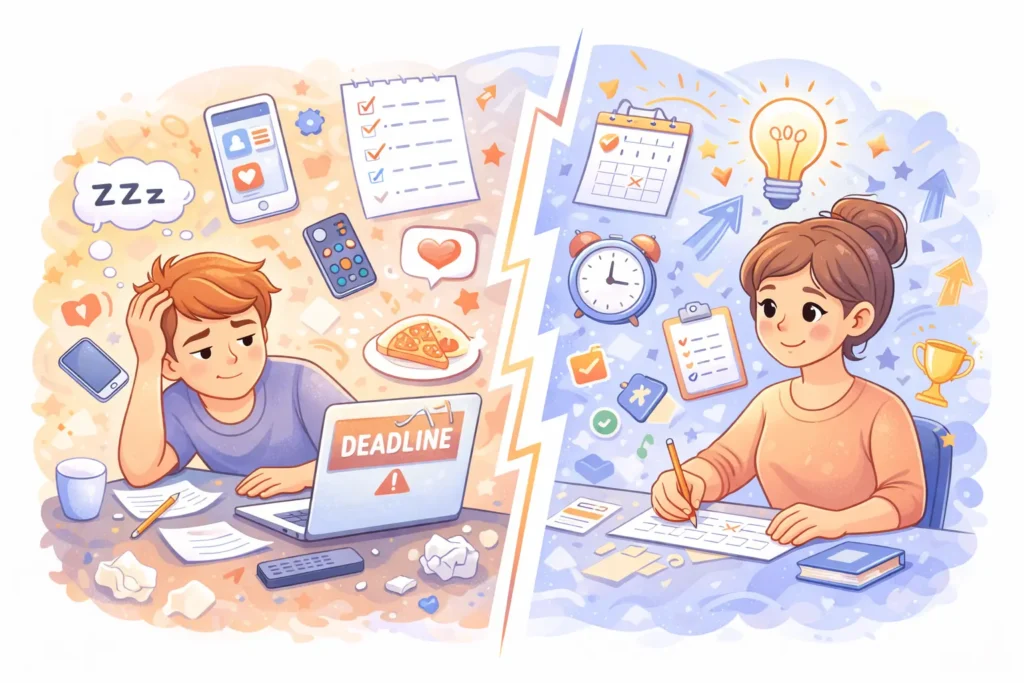
In fact, emotionally healthy couples do argue—but they argue well.
🟠According to the Gottman Institute, 69% of conflicts in relationships are recurring. What matters is how you repair, not how you avoid.
🔧 How to Resolve Conflict in Relationships (or Marriage)?
1. Start with Curiosity, Not Accusation
Ask, “Can you help me understand what you’re feeling?” instead of saying, “You always do this!”
Being curious about your partner’s perspective reduces defensiveness and fosters emotional safety.
2. Use the ‘Soft Start-Up’ Approach
John Gottman found that how a conversation starts predicts how it ends. Avoid starting with blame—begin with how you feel and what you need.
Example:
❌ “You never listen to me.”
✅ “I feel unheard when we talk. Can we slow down and really hear each other?”
3. Take a Break (Seriously)
If you or your partner feels overwhelmed, it’s okay to pause. Flooded nervous systems can’t solve problems. Come back to the conversation after 20–30 minutes.
4. Stay in the Present
Avoid kitchen-sinking (bringing up old arguments). Focus on one issue at a time.
🧩 Common Mistakes in Couples Conflict Resolution
| Mistake | Why It’s Harmful | What to Do Instead |
| Blaming | Sparks defensiveness | Use “I” statements |
| Interrupting | Shuts down dialogue | Practice active listening |
| Stonewalling | Creates emotional distance | Take breaks with intention |
👫 Couples Conflict: How to Grow Closer After a Fight
- Validate Feelings: Even if you disagree, acknowledge how your partner feels.
- Apologize Meaningfully: Skip “sorry if you felt that way” and own your part.
- Create a Repair Ritual: A specific routine or phrase that signals reconnection.
👉 Related Read: Setting Healthy Boundaries in Relationships
❤️ Conflict Resolution in Marriage: Unique Challenges
In marriages, unresolved conflicts can lead to emotional disengagement. That’s why learning how to resolve conflict in marriage is essential for long-term intimacy.
Tips:
- Schedule “State of the Union” talks weekly
- Work with a therapist or an AI mental health tool.
- Don’t assume mind-reading—speak your needs clearly.
✅ Things That Make Conflict Resolution Easier
- Emotional regulation tools (journaling, deep breathing)
- Knowing each other’s triggers
- Daily emotional check-ins
- Using humour gently (NOT sarcasm)
💡 Pro Tip: Use AI Tools for Emotional Support
If you're struggling with frequent fights, an AI mental health companion like SoulBot can help you reflect on your feelings and patterns. Think of it as a safe space to unpack without judgment.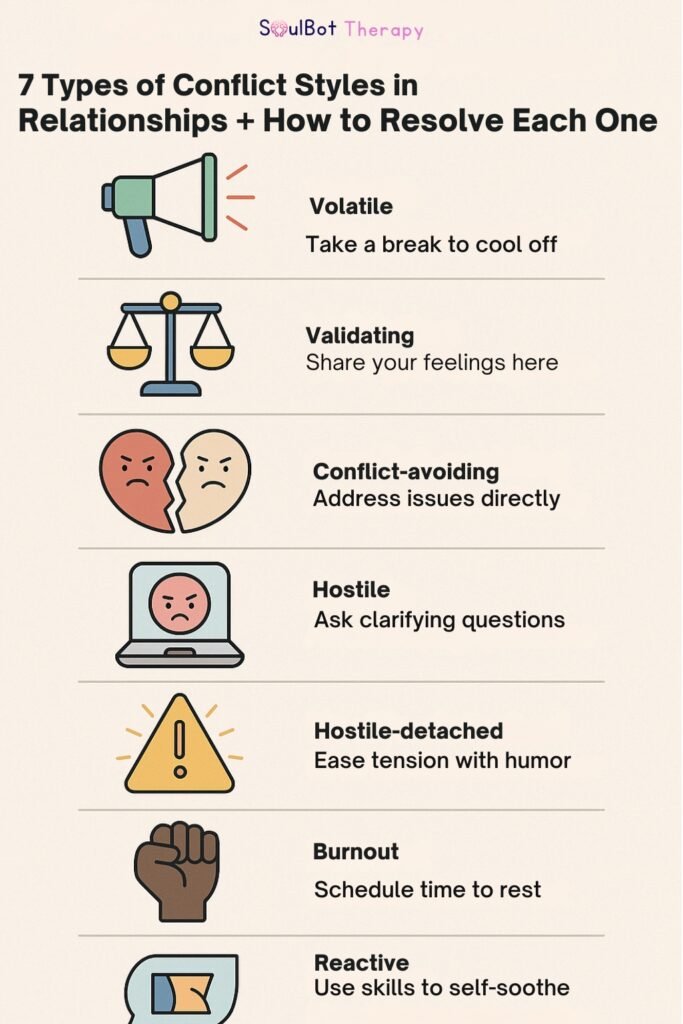
🧠Final Thought
Fights don’t break relationships—avoidance does. If you and your partner are stuck in conflict cycles, try new strategies, communicate better, and consider talking to SoulBot or booking a free consultation to rebuild together.